
Photos by Holly Webb
SOCIAL CLIMBERS: the UK’s supportive sport
Climbing first developed as a sport back in the late 19th century, however the last few years has seen it morph into a trendy training session for a growing number of people. Holly Webb visits the UK’s climbing capital of Sheffield to find out why
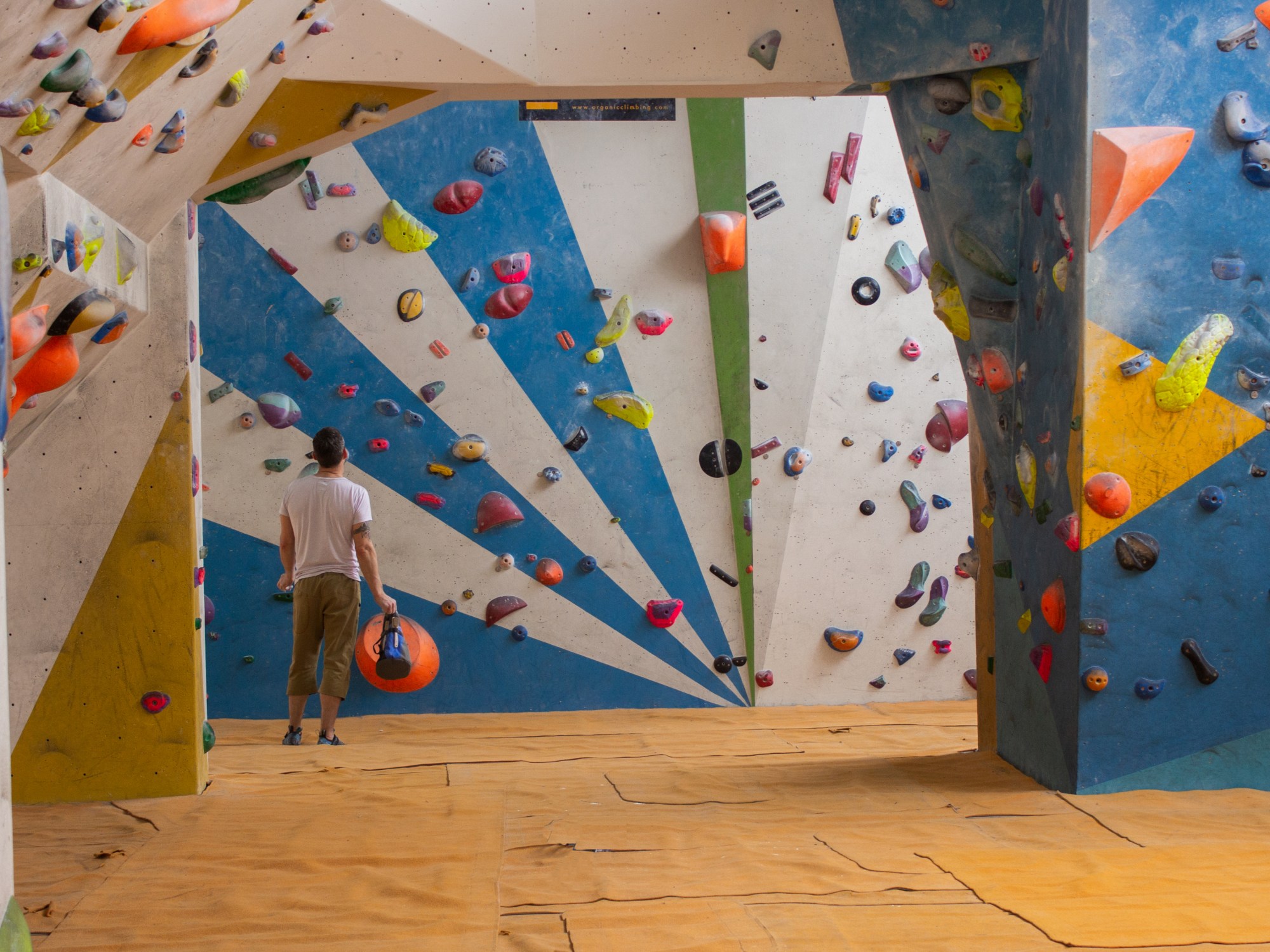
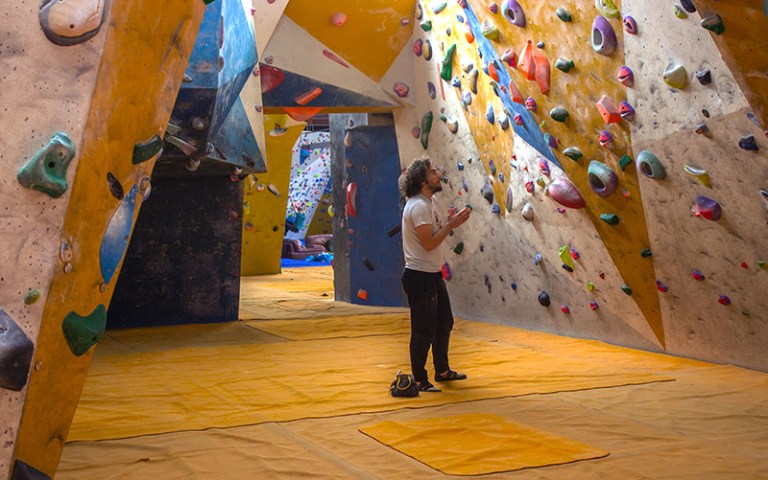
Walking into The Climbing Works for the first time is very much like walking into Willy Wonka’s concrete chocolate factory. A colourful maze of misshapen archways make a room the size of an aircraft hanger feel like an adventure playground, and there’s a thick yellow mat that covers most of the floor space.
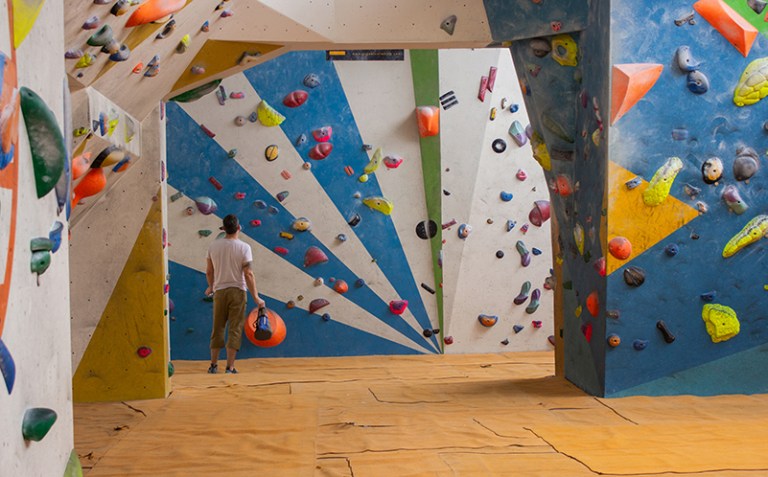
Surrounding the spongy centre of the room there are also a number of leather sofas and bean bags, and in the corner; a small shop complete with a snack bar and espresso machine. People are sitting in groups conversing – many of whom sporting casual, colourful outfits with a flat white in hand.
While this may sound like a unique experience, the Works – as the casually colourful people call it – is actually just one of four indoor climbing gyms within the city of Sheffield. It seems excessive for a city that has the climber’s paradise of the Peak District on its doorstep, especially since the newest wall The Climbing Depot opened just earlier this month.
However, the new wall in this already-vertical city is simply testament to the recent popularity of indoor climbing. According to market research by the Association of British Climbing Walls (ABC), over 1 million people visited an indoor climbing wall in 2017 – and the number grows every year.
In addition to this, Sport England’s most recent market research show that while a record number of people in England are getting active, “adventure sports in particular (such as climbing) saw significant growth” in 2018.
Carol Ng is an indoor climbing instructor, route-setter and has worked as a coach at The Climbing Works for six years. She believes that another climbing wall in Sheffield is welcomed by many, and goes as far to say that another climbing wall competitor is good news for them.
“Even though Sheffield is the climbing capital of the UK, it is because of the outdoor climbing we have here. This means that there are certain cities that actually have many more indoor climbing walls than us so it’s really a surprise that it’s taken this long for another climbing wall to open. I guess they found a gap in the market” she says.
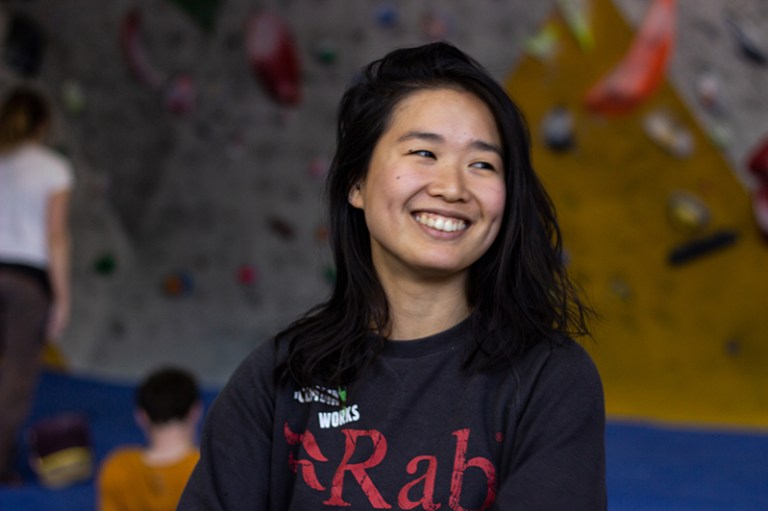
“We’re all technically direct competitors with one another but we’re all so different that I don’t necessarily see it that way. There’s also more than enough climbers in Sheffield to share the custom, and many people in the climbing community go to more than one of the walls. They are all quite different and each wall has its niche so it’ll be really interesting to go to the new place and see what they have”.
Alan James is the Director of UKClimbing.com – an online source of climbing news, reviews and updates across all categories of the sport. He thinks that while indoor climbing gyms are becoming more popular in the UK, it is not the case for the sport in general: “The obvious area of growth is in indoor climbing, but that doesn’t necessarily mean that more people are climbing outdoors… I can think of some types of climbing that are no more popular – or are even less popular – than in previous years”.
Alan thinks that this is happening due to the accessibility of bouldering compared to traditional climbing: “bouldering is relatively easy to get into without kit and too much instruction, whereas the leading requires a lot more of both”.
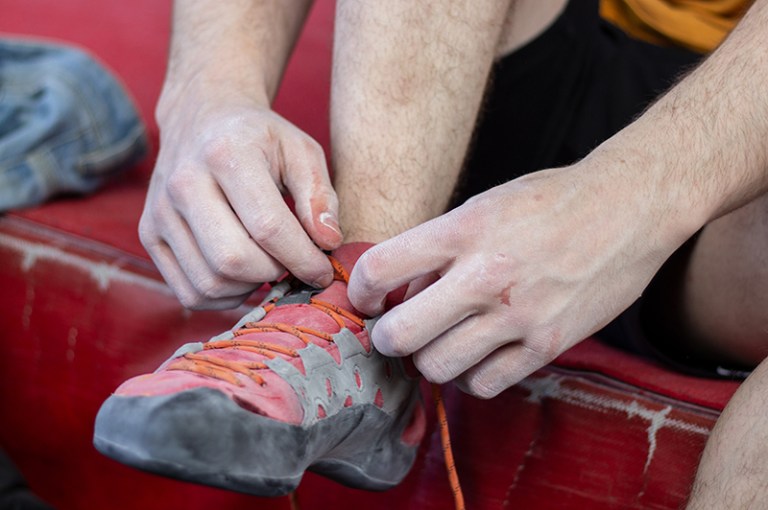
“Essentially two different activities are developing and the gap between the two is getting wider. There is a whole group of climbers now – especially in big cities like London – who use climbing as a fitness activity and have no interest in going outside. While virtually every climber who climbs outdoors will climb indoors on lead and bouldering walls at some point, the reverse isn’t true” he says.
He seems to be right – this new social group of climbers has developed from rising trends in using indoor climbing walls for a full-body workout, and when I walked into each of the climbing walls in Sheffield, I was greeted with smiles and muscular handshakes from a lot of them.
Gabriel Osborne, 22, is one of these ‘social climbers’ I met on the mats of The Foundry Climbing Centre. Although his hometown of Bristol has a strong presence in the UK’s climbing community, he chose to move to Sheffield for university to explore the climbing capital. “Climbing was a big part of why I chose Sheffield. The Peak District is 15 minutes away and there are so many world-class boulders. There’s not many decent-sized cities in the UK where you can still get out on the rock within an hour – it’s pretty special.”
“I’ve been climbing for about eight or nine years, but I started by just going once a week or so before I really got into it. I came here for university four years ago and I’d say that since then I’ve been taking it a bit more seriously. Now I’ve probably been coming about four times a week for the last four years”.
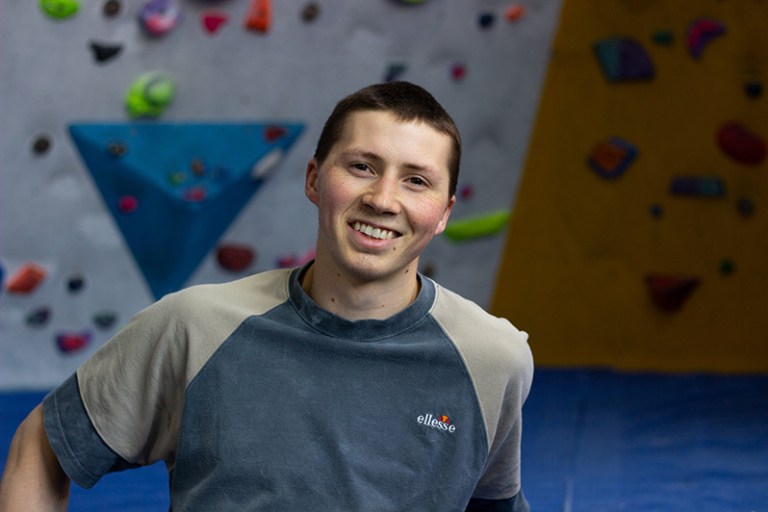
Like many, Gabriel’s obsession started out as curiosity. “I just saw it as something unique to do, like a hobby for the weekends. I had a lot of energy to burn when I was younger so I remember the first time I went climbing I loved the intensity of it.”
Like many others, Gabriel has now caught the climbing bug. “I love the way it combines strength with skill. You can’t just be super strong and expect to be good at it, you have to combine technique too. When you do the harder moves it can be like an entire body workout.”
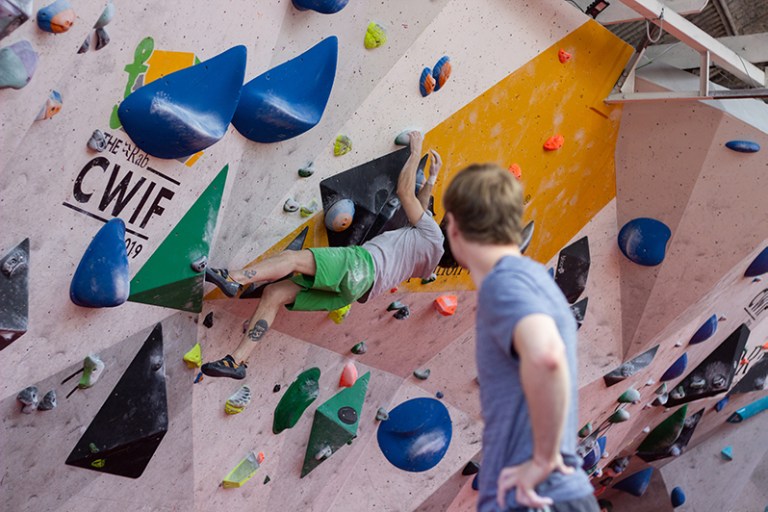
Gabriel seems to have flourished in Sheffield. His toned body moves up the wall carefully, every move placed with precision. Using only his fingertips and toes, he effortlessly supports his body on holds no larger than a matchbox. His hours spent in this warehouse are evident.
“Up here I have also noticed there’s a strong training ethic too. You’ll come to a climbing centre and the chances are there will be a bunch of people training hard as well as newbies, but when I used to climb down in Bristol I never really saw that many people training regularly. I think people are more switched on in Sheffield, as climbing is a huge part of life here.”
Daniel Pledge, 21, started climbing regularly in the last year and is also hooked. Like Gabriel, he enjoys the challenging workout that bouldering provides, and also savors the accepting and communal nature of the sport: “because you can do different grades and everyone is at a different level, no one is judgemental in climbing. There’s a climb that everyone can do, and people often like to help each other too.”
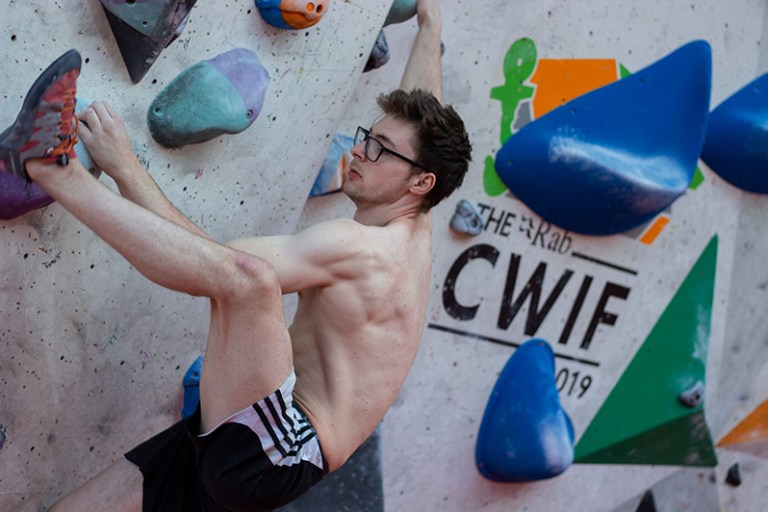
“Even the very best stop and talk to the beginners – there have been times where I’ve been at the wall on a Tuesday afternoon and a world-class climber that I’ve watched on YouTube has come up and helped me with a problem. They also have courses designed for amateurs and the more experienced people get involved to help. It really gets you involved in the community from the very beginning which I think is very unique for a sport.”
“You don’t just go for 90 minutes like you would with a football game”.
“It’s more than just a sport too: people who get really into climbing, they go on trips with other climbers, make friends in the community and even change their f*****g wardrobe. It sounds super cringey but it’s a lifestyle totally – you don’t just go for 90 minutes like you would with a football game”.
This factor was also evident in the few days I spent at the walls. The average visit would last anywhere up to a good five hours: a few hours spent climbing, and the rest spent drinking, socialising and bobbing your head to the drum and bass track playing on the loudspeakers.
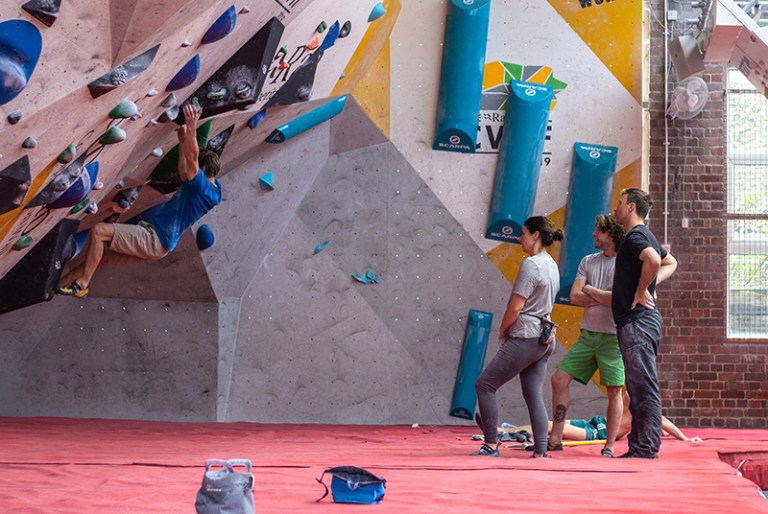
The communal benefit that the climbing world offers is something that is appreciated by both the world-class athletes and newcomers that are a part of it.
Lucy Creamer is regularly considered the most accomplished female rock climber in Britain, and since leaving Bristol in her early twenties, has called Sheffield her home. I met with her in a small cafe at the University of Sheffield where she gushed about the city and unique sport that is now also her career.
“The best thing about being a part of the climbing community is the characters you meet. They are people you don’t always come across in ‘mainstream’ society and they always have views and attitudes that are interesting. I felt that when I finally met climbers, I had found ‘my’ people – I instantly understood them and felt comfortable. I was also relieved that there were people out there like me! People are relaxed and accepting, which makes the social occasions something to look forward to.”
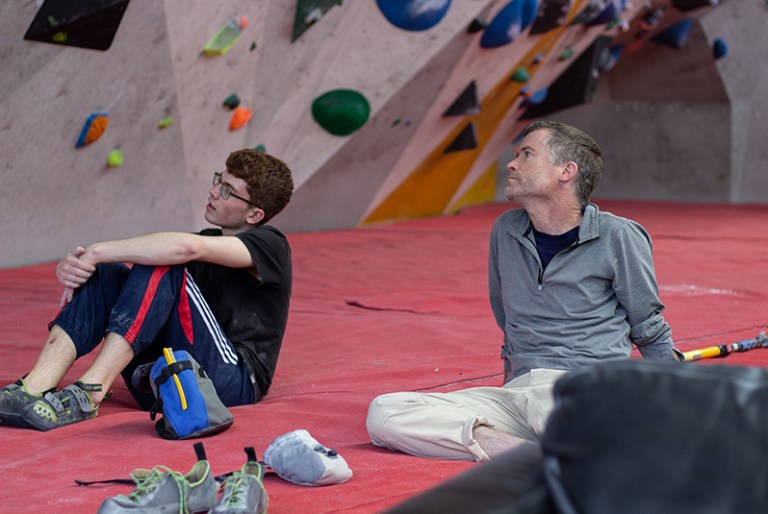
Lucy agrees with Daniel, explaining the unique nature of climbing: “It’s not your normal organised sport that you have likely experienced in school, it’s visually exciting and non-competitive – unless you count competing with yourself. It’s definitely a sport for people that hate team sports or people who can enjoy and create their own challenges”.
“It’s not your normal organised sport that you have likely experienced in school, it’s visually exciting and non-competitive – unless you count competing with yourself.”
We also spoke about Sheffield’s place in the climbing community, and its position on the international climbing wall-of-fame: “it is one of the only cities in the country with rock climbing on its doorstep, and a ready-made community on hand. The crags have always provided cutting-edge climbs nationally and are a draw for many people. Combine that with a healthy, hard training scene, and you find that a lot of the students and climbers who are drawn to study here don’t tend to leave”.
“It is also a sport that utilises a wide array of skills, of which the mental side is so important”.
A WORKOUT FOR BODY AND MIND
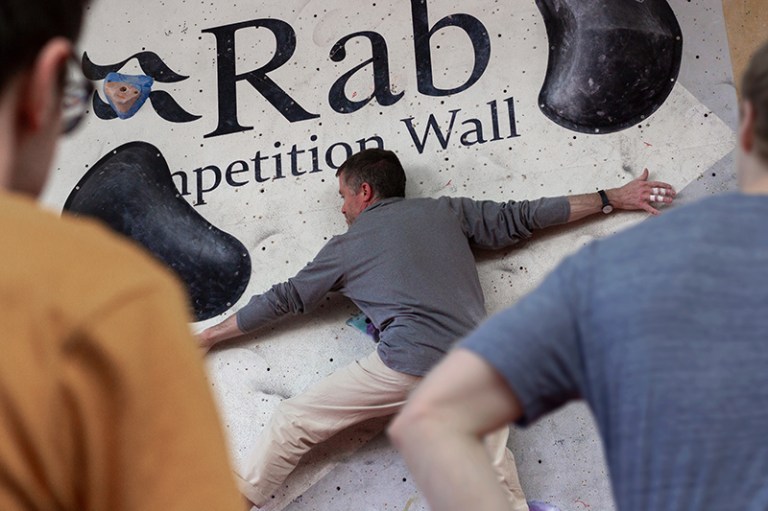
According to the NHS, rock climbing of all varieties provides an abundance of health benefits like many other forms of exercise. Their Modality Partnership website claims that indoor bouldering can be good for people with mental health issues and a sport that works well for people with dyspraxia. This is due to the ‘stable environment’ than means the individual only has to ‘move themself in relation to their environment’.
Hazel Findlay has been crowned British junior climbing champion six times, and also loves the mental challenges that climbing evokes.
Unfortunately, she was unable to meet with me despite also calling Sheffield her home as she is currently climbing in the Khangai mountains of Mongolia. Luckily – she found some wifi.
“Hi Hazel, I hope you’re having a great trip at the moment.”
“Hi Holly, I am thank you – it’s been challenging and rewarding, so I can’t ask for much else.”
“Tell me, why do you think climbing is having its moment finally?”
“Definitely due to the rise of indoor climbing gyms. There are other factors too of course – certain people like Alex Honnold and Tommy Caldwell whose ascents brought climbing to the attention of mainstream media. Both are great steps forwards for the sport.”
“And why do you think it’s becoming such a popular sport for such a variety of people?”
“Climbing has historically been a very white sport, but that is starting to change. A huge part of this change is the rise of the indoor climbing gyms that exist in almost all cities across the UK. The fact that you can walk in the door, start climbing and start meeting people means that anyone can do it. I also think that the climbing community has historically been very welcoming and open-minded so has responded very well to the changes in participation.”
Hazel is another one of the lucky few that get to call climbing their full-time job. It’s a tough move going professional in the climbing world as there is limited funding from Sport England to provide funds for the athletes – however this is now possibly set to change.
GOING FOR GOLD
Due to the increasing popularity of indoor climbing walls and the impact of climbing celebrities such as Sheffield’s own Shauna Coxsey, climbing is now set to make its Olympic debut next year in Tokyo.
The sport will feature three disciplines: speed climbing, bouldering and lead climbing. The final rankings being determined by the best combined result of athletes competing in all three.
This has since divided opinion among the climbing community – with some saying that the nature of sport climbing extracts people from the cliffs and crags outside.
This however, was not the overall feeling in Sheffield: “I’m all for it,” said Lucy, “being both an outdoor climber and competitor, it seems great for the sport. We are a nation of very good climbers and we could do extremely well on the international stage. It will bring money into the sport and help to make the competitive side more organised. I don’t think it will have a negative impact on the more informal outdoor component of the sport and climbing will retain its individuality”.
Alan James of UKClimbing.com agreed: “Most outdoor climbers are unhappy about it as the activity proposed for practice in the Olympics bears little relation to actual climbing outdoors, but in my opinion climbing in the Olympics will be good for publicity and getting young people into the sport.”

Towards the end of the day, the numbers in each of the climbing gyms dwindled down – many heading home or to the nearest pub together.
Something about the chalky footprints and empty coffee mugs made me want to come back again the next day – maybe I’ll even make it off the ground. One thing is for sure however, and that is that I will definitely be tuning in to watch climbing make its debut in the Olympics next year. Who knows, I may see some familiar faces.
 webbphoto