
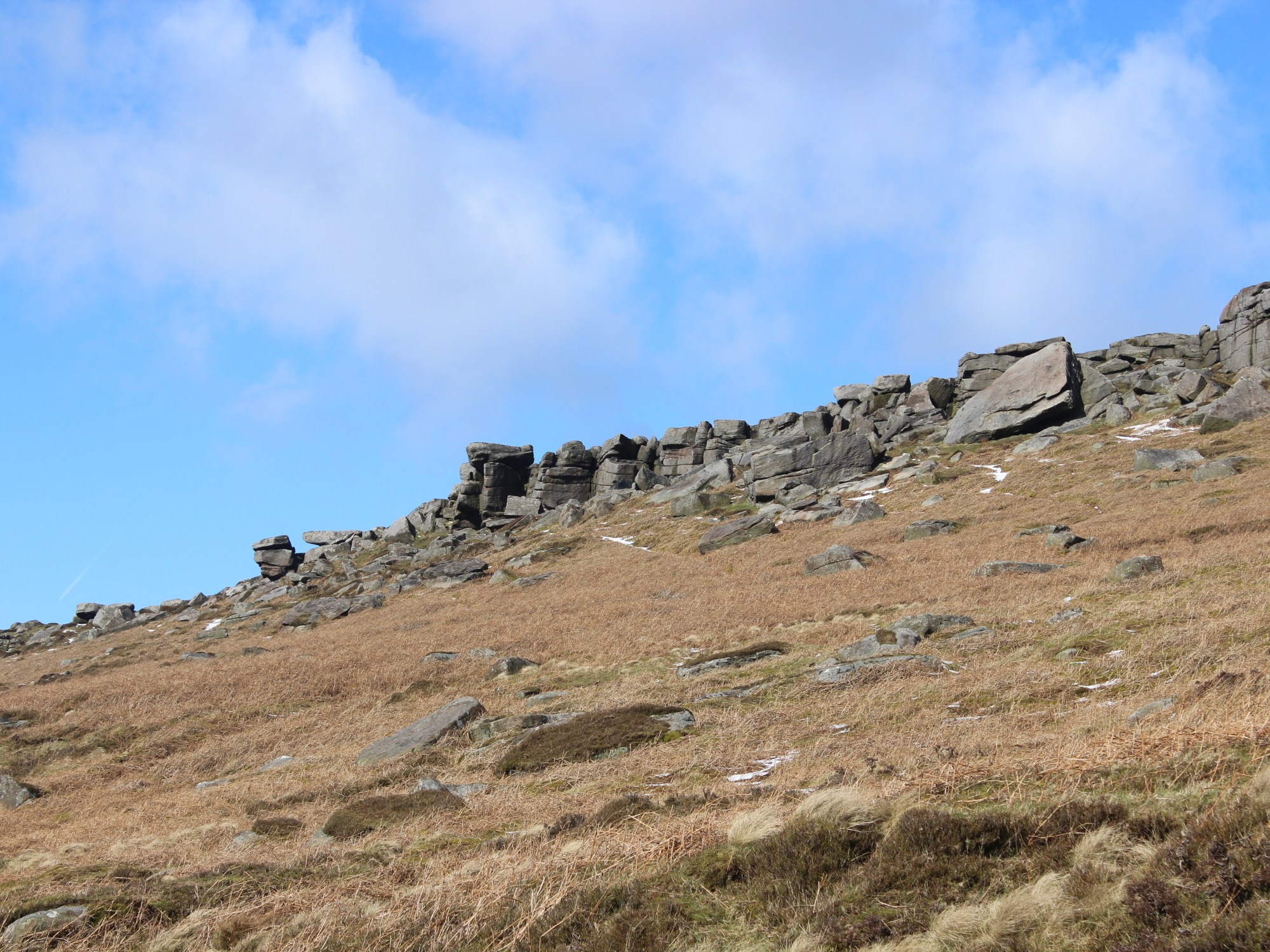
Photo by Holly Webb
Sheffield is internationally known as the ‘climbing capital’ of the UK. I’ve done some research about the facilities and what people in the climbing community say about Sheffield as an ‘outdoor city’.
Being referred to as the climbing capital of the UK may be because of the extensive numbers of indoor climbing gyms the city has, or the fact that the Peak District is on its doorstep, or a mixture of the two.
The Peak District
The Peak District is on Sheffield’s doorstep, and most areas of Sheffield can be reached from the climbs of Sheffield in under 30 minutes.
It has some of the most challenging and popular rock climbing routes in Europe, and includes the internationally-known Stanage Edge which is on the border of Sheffield. No one knows the exact number of recorded climbs in the Peak District, but it exceeds 10,000.
Many world-class climbers live in and around the area, and whether you are a beginner or world-class athlete, there are routes for everyone.
Stanage Edge, which towers above Hathersage and offers some of the most expansive views of the Peak District, is the most famous Gritstone climbing location in the area, with modern climbing taking place as far back as the 1890s. However, Burbage Edge and Wharncliffe Crags offer excellent alternatives. There are also opportunities to tackle limestone faces further south towards Tideswell and Stoney Middleton.
For more information see 1, 2, 3, 4,
Sheffield as a city
Being such a large diverse city, the opportunities Sheffield offers run to far more than just the climbing.
Sheffield is officially the greenest city in Europe, and has more trees than people (over 2 million).
The city is well placed on the motorway network with the M1 directly east of the city. Trains links are good with the east coast mainline taking you to London in 2 ¼ hours. Hull is an hour east from where ferries go to much of Europe. There is no immediate airport but Manchester, Robin Hood and Leeds-Bradford are all within an hour’s travel.
The City of Steel is rebranding itself as the UK’s Outdoor City in attempt to not only promote tourism and investment in the South Yorkshire capital but also encourage people to live a healthier way of life.
A new study, the Outdoor Economy Report carried out by the Sport Industry Research Centre at Sheffield Hallam University, says the city has the highest household spend on outdoor equipment in the country, high participation rates in outdoor recreation and more than 200 outdoor businesses.
For more information see 1, 2, 3,
Climbing facilities in Sheffield
‘The Grit’ attracts climbers from across Europe and beyond, often at fairly random times of year, but more regular are climbers from Wales seeking respite from the winter.
Its climbing routes are reported to be the main reason many people from around the world decide to live, work and study in the city.
Sheffield has one of the largest concentrations of climbers anywhere in the world. Surrounded by the Peak District, with its countless recorded climbing routes on boulders, edges, crags and quarries, it’s no wonder that the city has become a mecca for climbing enthusiasts.
Not only does it have thousands of climbing spots around the outskirts of the city centre, there is also the indoor climbing centres.
Sheffield is well supplied with climbing walls. In fact I’d be surprised if there’s a city anywhere in the world with more wall space per person. There are two big climbing centres offering everything – The Foundry and The Edge and two dedicated bouldering walls – the Climbing Works and the University’s small but popular Matrix. There is also a top-roping wall at the Virgin Gym.
Sheffield has a proud heritage of climbing. In 1991 The Foundry became the first dedicated climbing centre in the country, setting the standard for hundreds of other walls across the UK. Meanwhile The Climbing Works, off London Road, was the world’s biggest bouldering centre when it opened in 2006. There are other places to do indoor climbing, such as Awesome Walls in Burngreave and the University of Sheffield’s bouldering wall at Goodwin Sports Centre, one of the largest fibreglass moulded walls in the country.
Novice climbers of all ages can find tuition and classes at all of the indoor centres. Meanwhile there is enough variation and range of routes to allow experienced climbers to challenge themselves every time they visit the walls.
All of the Sheffield indoor centres can advise on outdoor climbing, with many arranging trips in the summer months. There are also independent clubs, such as Peak Climbing Club and Castle Mountaineering Club, which accept members of all ability and organise regular events.
It’s unsurprising that the city’s parks have also succumbed to the appeal of climbing. Several purpose-built climbing boulders have popped up all over the city in recent years. Built to closely mimic the natural boulders and slabs found out in the Peak District, these public facilities offer a convenient and fun opportunity for novices and experts alike to work on their technique – all for free. See this google maps for more details.
The best indoor bouldering gyms in the UK are commonly rated as:
- The Foundry – Sheffield
- HarroWall – London
- Climb Newcastle
- The Climbing Hangar – Liverpool
- The Climbing Works – Sheffield
- Kendal Wall
- Highball Climbing Centre – Norwich
- The Climbing Depot – Birmingham
The Climbing Works is a monster of a venue, not just in terms of its local area, not even just in terms of the bouldering UK scene, but internationally. Opening in 2006, the venue, which now has two dedicated buildings to bouldering, was for a time the largest bouldering gym in the world. Indeed, the venue has also been awarded National Performance Centre status, and is therefore able to cater for climbers from beginners to elite athletes.
Owed to its size, The Climbing Works offers a massive 600 boulder problems, with around 120 climbs for casual climbers and over 100 climbs set for experts and elite level athletes, including members of the British Bouldering Team. In line with bouldering’s ethos of being an inclusive sport, The Climbing Works also offers a student rate on Wednesday afternoons, and has a large social media following online, making it a fun and vibrant bouldering wall for all to enjoy.
Put simply, The Foundry is a legendary venue for aficionados of indoor rock climbing and bouldering in the UK, and therefore it is not surprising that students and climbers voted for it as the best. Although it was the first dedicated bouldering wall to appear in the UK, and maintains a serious reputation in the industry, The Foundry runs classes for all, including regular introduction to climbing courses and 1:1 coaching sessions including the facilities to run lattice assessments.
The Foundry also has big names like Steve McLure and Dave Mason setting routes for them, ensuring that their four distinct bouldering circuits are full of tricky and challenging problems for climbers of all abilities. However, if there is one thing The Foundry is famous for, it’s their unique bouldering wall: The Wave. Differing from normal wooden walls, this resin construction mimics the feel of real rock, and is the central attraction of this legendary venue.
For more information see 1, 2, 3, 4, 5 and 6.
Famous climbers in Sheffield
There are so many climbers in Sheffield, and so many good climbers, that there is no one ‘scene’. It rarely takes long for new arrivals to settle in with a group with similar interests and ability, and its never hard to find someone up for something different. Despite hanging out regularly in the three main climbers pub’s – The Lescar, The Broadfield and The Sheaf View, it is yet to be worked out who ‘The Sheffield Mafia’ is.
- Steve McClure, rock climbing pioneer.
- Jerry Moffatt
- Lucy Creamer
- Shauna Coxey
- Ben Moon
- Hazel Findlay
 webbphoto