
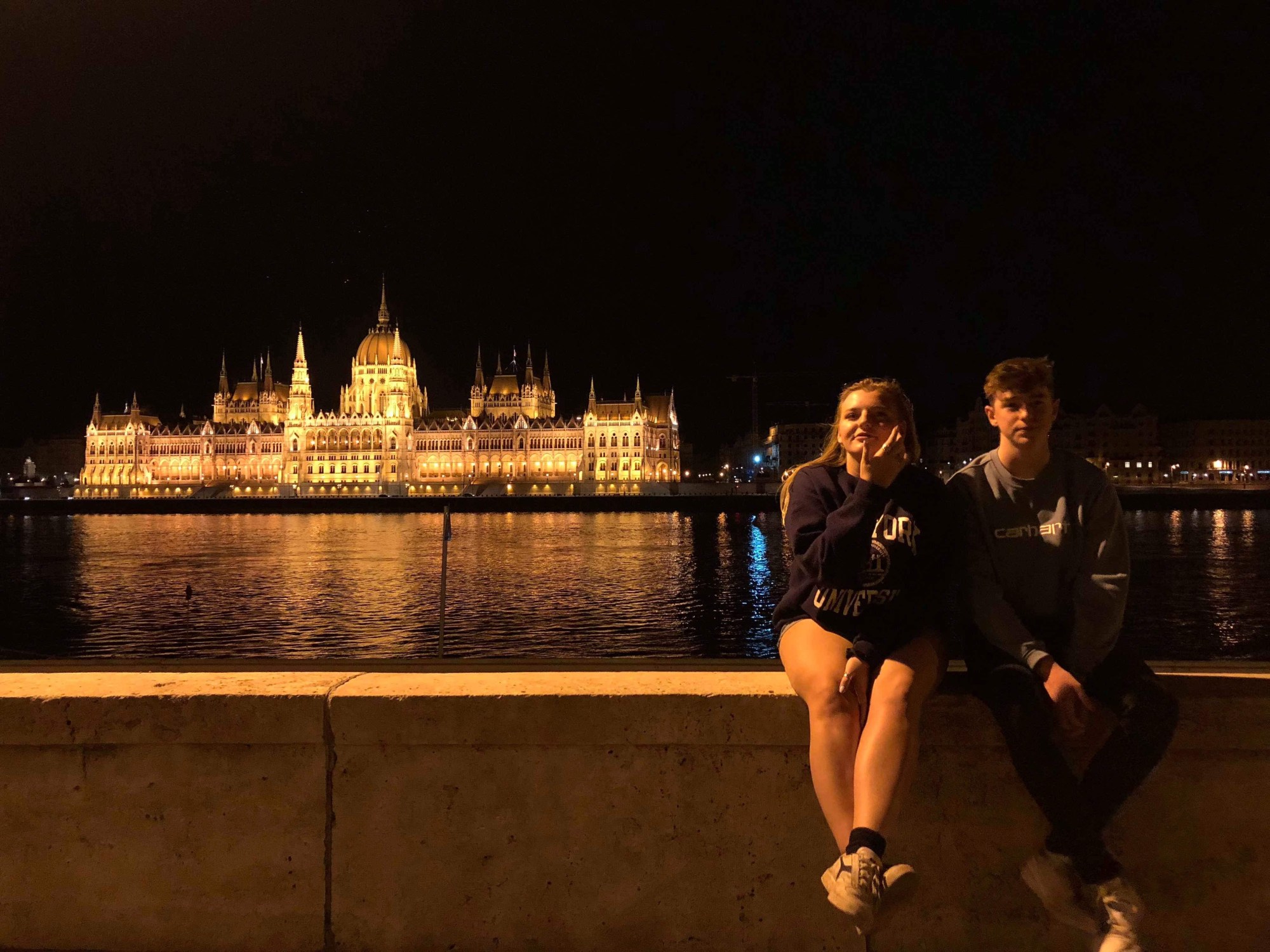
Photo by Abbie France
In this week’s seminar, we studied the theory of photography more by looking into semiotics.
I really enjoyed learning some heavier theory behind photography because I have never studied anything similar before. Photography has always been a hobby of mine, and I regret not taking subjects like media and photography in my A Levels as I never considered them as a possible career, only as hobbies.
I also think that studying the theory behind photography will be very useful when I come to actually putting together my project. It will be useful to look back on and consider throughout the creative process to make sure my images are impactful.
These are my notes from the seminar:
Semiotics
Semiotics: the study of meaning
Semiotics looks at how people attach meaning to the real world, image, word and sound.
Ferdinand de Saussure
1857-1913. Originator of European semiotics.
Saussure argued that language – written or visual – is a system of signs. The meaning of a sign is generated by common usage and culture.
There are two parts to a sign: the signifier and the signified.
The signifier is the thing (the image, the word, the sound) and the signified is the meaning that people take from that signifier.
This becomes more complicated when a signifier is created by a person, as they have their own meanings for things developed from their social surroundings and display these in their work. This is called encoding.
In addition to this, the people reading or looking at the signifier have their own meanings for things developed from their social surroundings, and so will interpret the signifier in different ways. This is called decoding.
This applies to works such as books, photographs, paintings, models etc. that are created by people. It is more complicated because meaning is being created in two places.
Semiotic Analysis
In semiotic analysis, we look at the encoding and decoding. Think:
- what the author meant when it was created
- how we decode it to mean what we think
- how it may be decoded by other people and what other meanings could come from it
To do this you can break a photograph down into signs.
Relating to the image content:
- who/what is the subject?
- who/what else is in the picture?
- what is happening?
- what is the environment?
These are decoded meanings.
Relating to the image photography:
- how was this lit? and why?
- where is the focus? and why?
- what does the composition tell us?
- has the image been obviously processed?
These are encoded meanings.
Photos can tell stories
Stories of pleasure vs. stories of bliss.
Stories of pleasure have a satisfactory structure of a beginning, middle and end. Stories of bliss however don’t, and end ambiguously, leaving us with questions at the end.
In Photojournalism
In photojournalism, photographs combine with text to create these stories of pleasure and bliss.
The text provides the context to the image.
Many photographs are stories of bliss as the freeze-frame nature naturally leaves lots of questions unanswered.
If a news photographs is a text of pleasure it is normally because we know some context that provides an obvious story with the photo. This is usually in the form of words alongside the image.
Photographs may also tell a story in the more conventional way of chronological order or sequence.
Much like last week and learning about the different types of journalism, I really enjoyed learning about the theory behind a lot of photographs. Hopefully this knowledge will boost my own project and can be something I look back on in the future when piecing together photostories.
UPDATE: To read my reflection of this week’s work, click here.
 webbphoto
2 thoughts on “What is semiotics?”