
Photo by Holly Webb
After learning about the theory behind semiotics (see my notes here), we were also given a task this week to do some more research into some of the world’s most famous photographs. To see the full brief click here.
TASK ONE:
find a news photograph that has been constructed or set-up
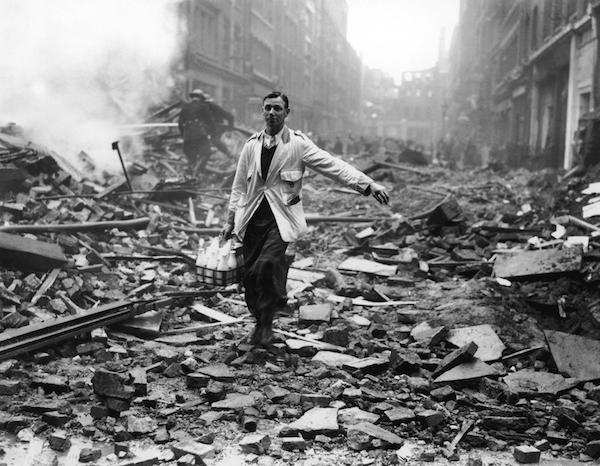
For the first task, I decided to choose this image called ‘The London Milkman‘. It was taken in 1940 by Fred Morley.
The reason I decided to choose this particular image is due to the fact that I had seen this image before and thought I knew the story behind it, however like many people, I didn’t realise it was actually set up.
The story behind this image starts with the series of London bombings known as the Blitz in the Second World War. The German bombers targeted London and other major industrial cities in the UK from September 1940 until May 1941 to harm productivity and essentially demoralise the British.
This photograph was taken by Morley after one of the German raids in October 1940.
Many similar photos taken in this period were censored by the government to avoid causing panic among the British however Morley wanted to avoid this. After finding the scene of firefighters tackling a blaze, he borrowed a milkman’s uniform and crate. He got his assistant to pose as the milkman in the hopes that the ‘Keep Calm and Carry On‘ attitude would avoid censorship.
He was successful as this image was published the very next day, and some historians have even argued that it was a major aid in pushing forward the idea of the stoic British continuing on with their normal lives.
Even considering the set up, I still believe that the meaning behind the image is accurate and that the viewer has not been heavily manipulated. There was in fact a milkman working that day, and – generally speaking – the attitudes of many Londoner’s was indeed to ‘Keep Calm and Carry On‘. Another thing worth mentioning is the fact that although the focused subject of this image is set up, the firefighters in the background are 100% real and the rubble and environment in the image was candid and authentic. This is why I don’t believe the image displays a false or manipulative view to the viewers. Morley clearly had an idea that he wanted to create, however only needed to construct one character in quite a busy scene in order to do so.
See rarehistoricalphotos.com for more information.
TASK TWO:
find a photograph taken from a point of view that affects the story
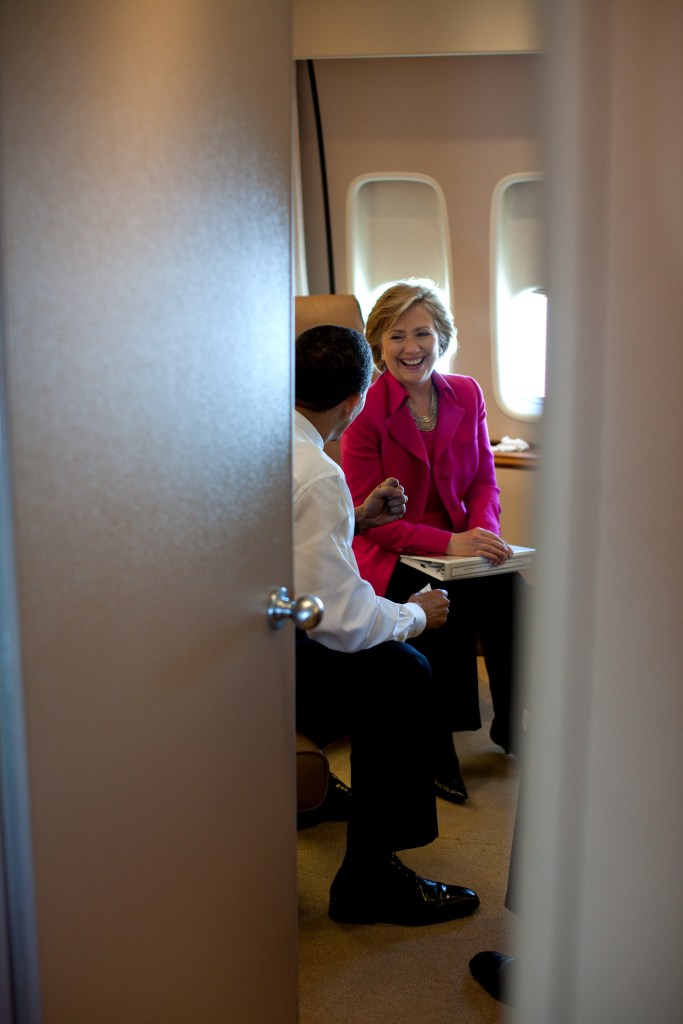
I decided to chose this image by Pete Souza – one of my favourite photographers. (See my research on Souza’s work here)
It stood out to me because of what Pete Souza said himself about the set-up of the shot and how it affects the communication and meaning of the photo to the audience.
In the description of the photo, Souza says how the President and Secretary of State were having a meeting aboard Air Force One en route to France. He had shot multiple times from their side and wasn’t happy with the pictures.
In the description he said ‘I thought looking through the doorway gave the scene a more intimate feel’ – which is something I believe is pulled off perfectly.
I think the position of Souza from outside the door does what he intends: it gives their conversation a more intimate and private feel – almost as if it is something top secret or high-profile. In addition to this, having the door slightly ajar and visible to the viewer, also makes you feel as though you are looking-in on something that is usually ‘behind closed doors’, almost as if the viewer is getting a view that no one has seen before despite occurrences between Obama and Clinton to be quite common.
I do believe that the image portrays a relatively accurate depiction of what was happening on the day. The positioning of Souza behind the door does not swerve the meaning of the photo, merely adds depth to it.
I really like this image in particular – it is an example of how even though you may not be setting up the entire shot, there are certain things you can do to create a certain feel to the photo that you’re trying to portray.
I look forward to learning more about this in the next few weeks of seminars when we begin to study camera functions and different photography techniques.
To see Souza’s comments on the photo, click here.
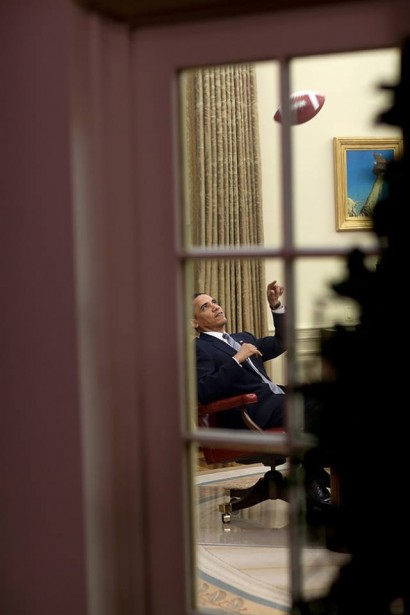
You can also see Souza executing similar positioning techniques in the following photos:
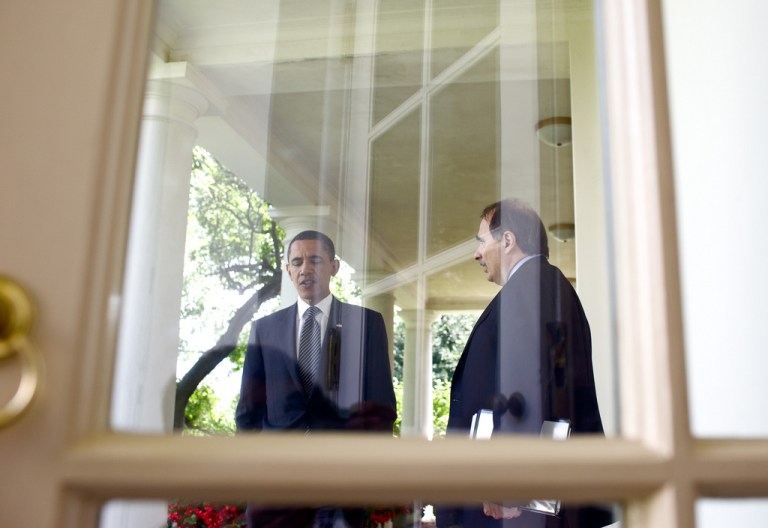
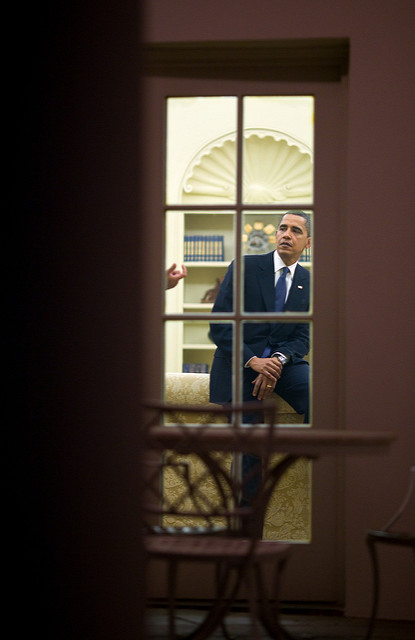
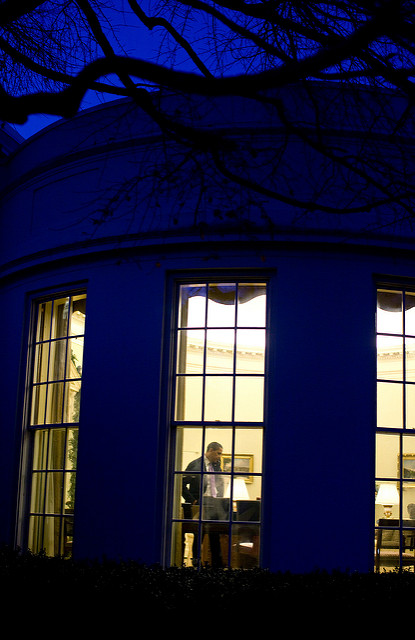
TASK THREE:
find a photograph whose “meaning” was disputed
For the third task, I found that finding a picture was the hardest. I wanted to find a picture that was interpreted to have different meanings to different people, rather than just be a trending photo of a dress on the internet.
I took the brief quite literally and I instantly thought of this image:
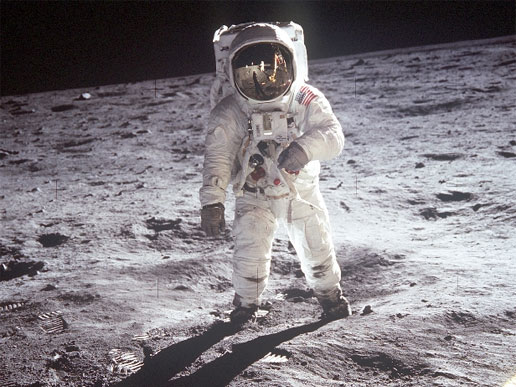
The meaning of this picture was – and still is – largely disputed due to the fact that some people do not believe it is real.
The history of this image is quite evident. It is a photograph of astronaut Buzz Aldrin walking on the surface of the moon near the leg of the lunar module Eagle. Neil Armstrong took the photograph with a 70mm lunar surface camera. Armstrong and Aldrin explored the Sea of Tranquility for two and a half hours while crewmate Michael Collins orbited above in the command module Columbia.
It is still regarded as one of the most famous photos of the 20th Century. As Armstrong was designated as the ‘first man’, it was actually Aldrin that mankind actually saw on the moon. As Armstrong took the photos and videos, it was Aldrin seen climbing down the ladder and Aldrin stood vulnerably on the crater of a world that was unexplored by mankind arguably until Armstrong clicked record. Truly a significant capture.
However, many people dispute the reality of the famous image. In this article, the vast controversy is explained to be not just of the photo but the moon landing in its entirety.
I wanted to find an image that had a more controversial discussion surrounding it, however after searching for hours this was the best photo I could find.
For more information on this image, click here.
I really enjoyed this weeks task as it allowed me to search through and appreciate some of the world’s most famous photographs.
I enjoyed reading the stories behind each of them, as well as gaining more inspiration for my own project. To read my reflection on this week’s task, click here.
 webbphoto
One thought on “Week Four Task”